
Our History
OUR STORY
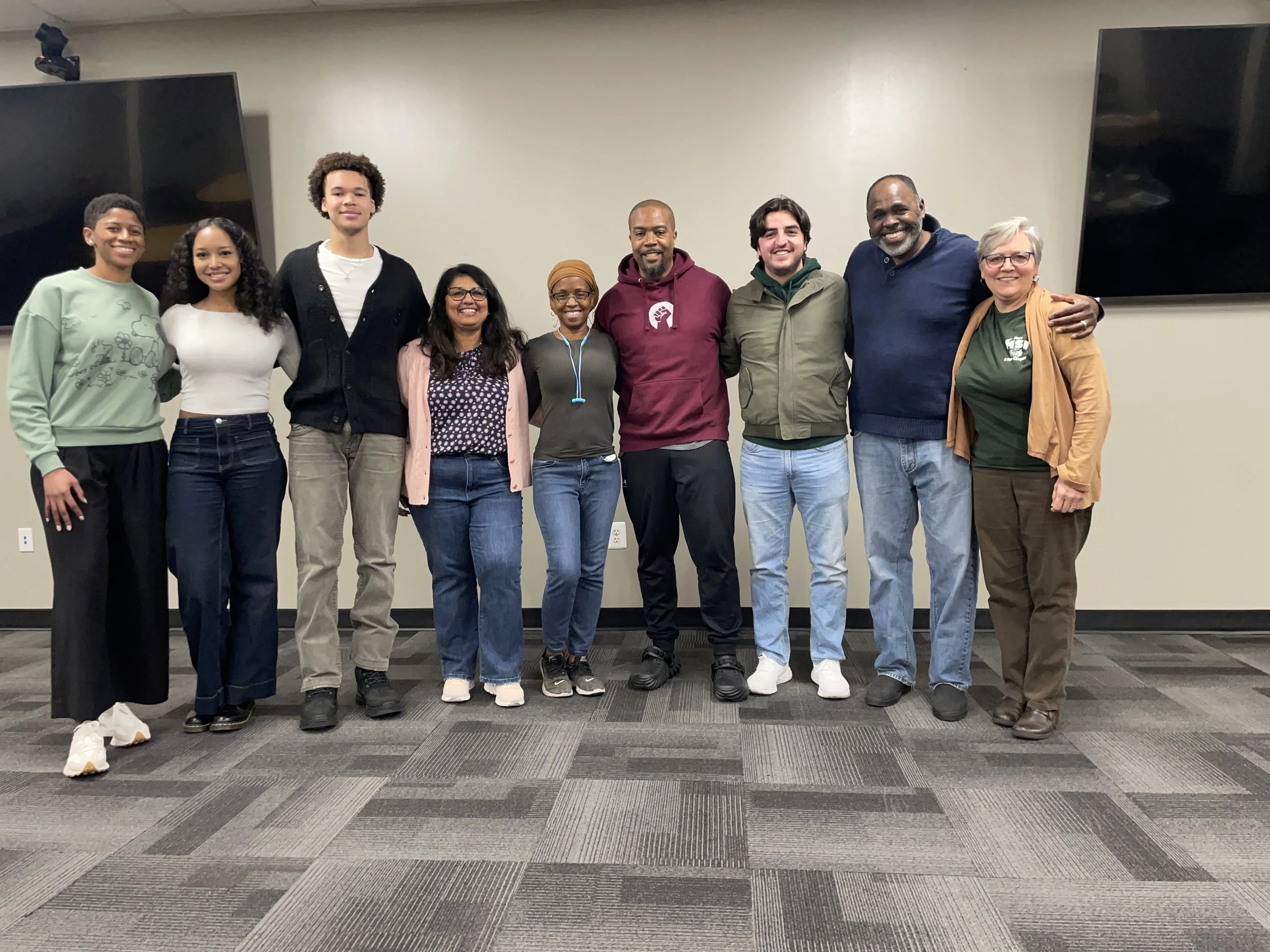
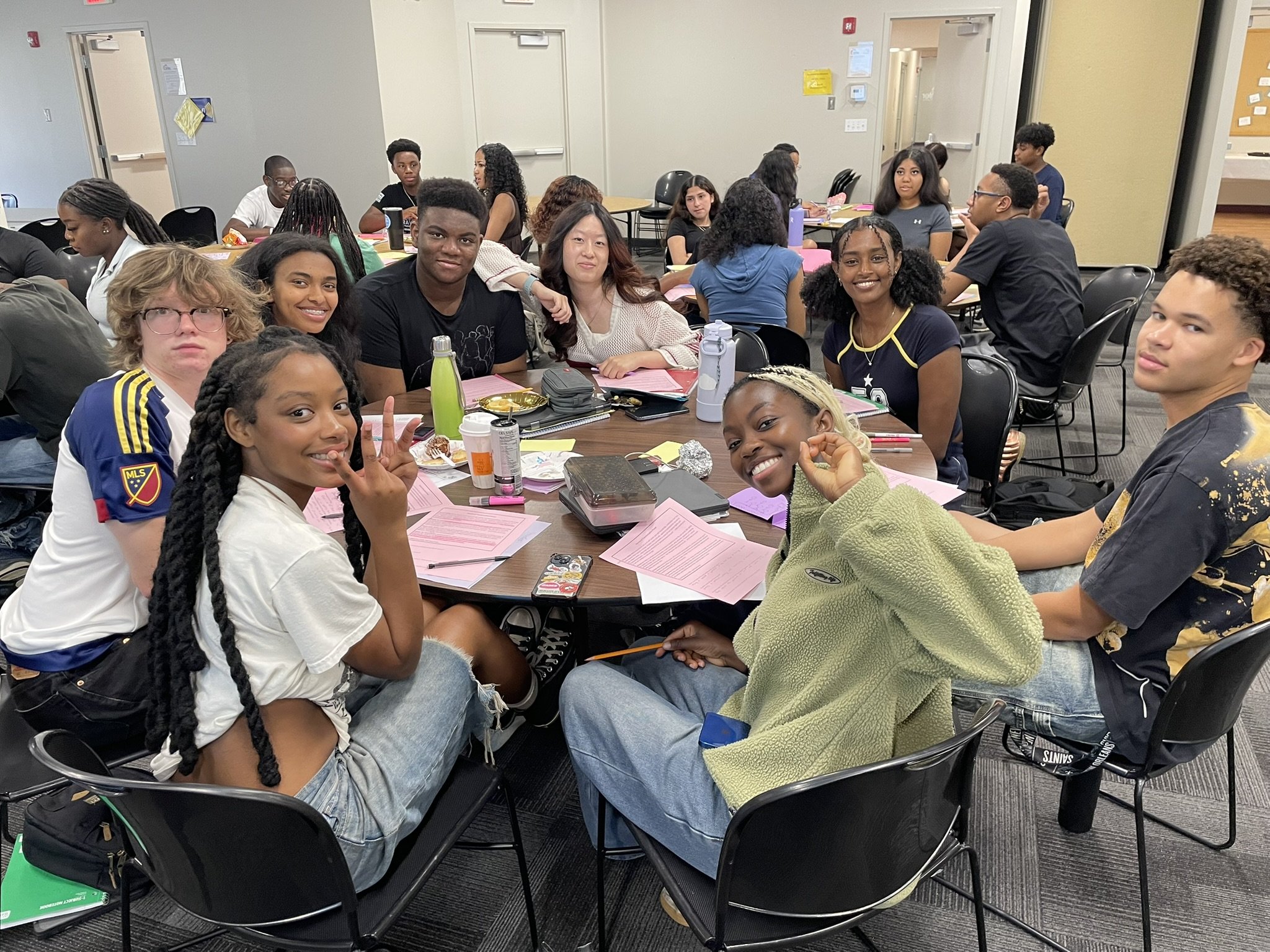
On a fairly non-descript Sunday morning in the spring of 2014, a small group of students, dressed in purple t-shirts, gathered to lead a movement and a march that would be the first of its kind in the State of Maryland and perhaps across the country. It was a march reminiscent of the Civil Rights Era – most notably the Children’s March of 1963 in Birmingham, Alabama. But this was not a march in which the 500 or more participants were met with fire hoses, dogs, or racial taunts. Nor did it take place in the Deep South. This march, while most certainly an extension of the Civil Rights struggle, took place in Rockville, Maryland and was supported by city law enforcement as well as other Montgomery County officials. This was a March to Close the Achievement Gap, led and organized by the Minority Scholars Program (MSP) – a student driven initiative aimed at tackling the opportunity gap.
The purple clad student leaders gathered on that 27th day of April 2014 in the parking lot in front of the Carver Educational Services Center (CESC), a building that functions as the Montgomery County Public Schools (MCPS) central office as well as the School Board headquarters. But the symbolism was far more powerful – during the segregation era, Carver or CESC was the only high school in Montgomery County, Maryland made available for students of color. The student leaders, having only recently learned of this history from the handful of dedicated MSP coordinators from the various high schools, circled around the flag pole unaware that the power of such symbolism would steer the day towards its amazing success and be an impetus for real change in Montgomery County, Maryland. As soon as they finished their circle of affirmations around the flag pole, their hard work and faith would soon be apparent as buses would roll in with over 500 students from 12 different high schools in the County, and the Washington Post, Gazette, News Channel 4 and TV One were among the media entities on hand to cover the march.
Truth be told, the march was a culmination and build-up of a coordinated struggle, nine years in the making. It was a movement born in one school, Walter Johnson High School, back in 2005. And it would catch fire and eventually spread to the 12 schools represented at the March to Close the Gap. To date there are now around 70 Schools (25 high schools/30 middle schools/15 elementary schools) that officially have MSP programs in Montgomery County, along with two districts in Maryland that have adopted the MSP model - Kent County and Frederick County.
When asked why the March to Close the Achievement Gap was so successful in getting out so many students. The response is quite simple, but also emblematic of the power of the Minority Scholars movement as a whole – not simply the march. “The march was successful because students themselves were empowered and played a role every step of the way…from devising the plan, publicizing the event, inviting their peers and classmates, and hosting and speaking at the march’s culminating rally.” The Minority Scholars Program has tapped into a vital piece of the puzzle to solving the opportunity gap. MSP is unique in that it empowers students themselves to play a role in finding and developing solutions to close the “opportunity gap.”
THE HYPE
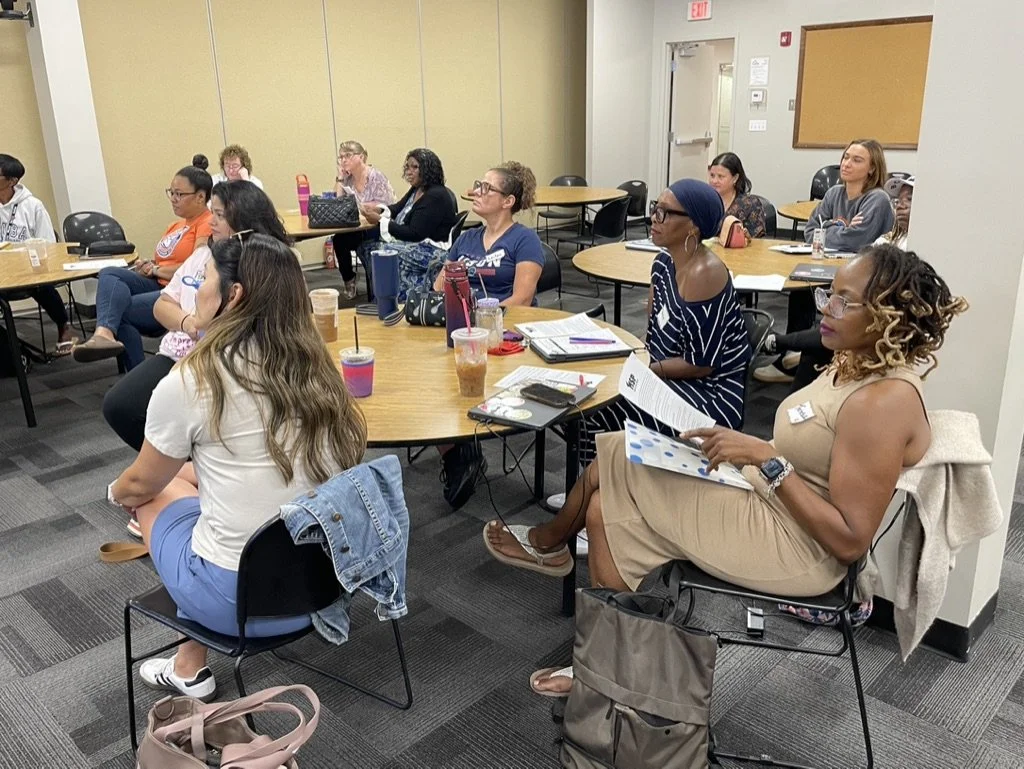
The unique character of the Minority Scholars Program was not actually something deliberately planned from the outset. Instead it emerged, and was shaped by the force and energy of the students themselves who took the notion from their adult supervisors, embraced it as their own mission, and ran with it. That was back in 2005, when the Principal of Walter Johnson High School, Dr. Chris Garran, called Michael Williams and Esther Adams into his office for a meeting along with then assistant Principal Dr. Edgar Malker. Michael Williams was a third year social studies teacher and Esther was one of his colleagues in the social studies department. They were two of perhaps only five African American teachers on staff. Dr. Garran was very concerned about a particular situation. The prestigious Morehouse College in Atlanta was offering a full scholarship to one of our African American males who met the minimum requirement of a 3.0 GPA. Yet in 2005, Walter Johnson High School, a prominent school in the esteemed Montgomery County, Maryland had not a single African American male student who met the minimum requirement. This shocking revelation forced us to look at the numbers and data. What we saw was an appalling record concerning the state of our Black and Latine students. The achievement and opportunity gap was staring at them first hand. Despite being a school of much prestige, Walter Johnson High School of 2005 was one in which the majority of Black and Latine students were in on-level or remedial courses. In fact, it would be easy for an outsider to take a glance and conclude that the classes were largely segregated. So after a handful of meetings and much deliberation, the principal tasked Williams and Adams with the task of building and leading a student focused effort at tackling the achievement gap. Students quickly embraced the concept and ran with it. They decided it would be called the Minority Scholars Program (MSP) and it was they who truly developed it into a student-driven initiative aimed at tackling the opportunity gap. Over the first five years of MSP, the number of Black and Latine students in Honors and AP classes jumped more than 35 percent. The WJ school culture became far more inclusive and integrated, as more Black and Latine students could be seen on the yearbook staff, SGA, and the school newspaper. Furthermore, Morehouse College was finally, and continuously, able to offer full scholarships to a number of WJ’s Black male students.
THE UNIQUE CHARACTER OF MSP
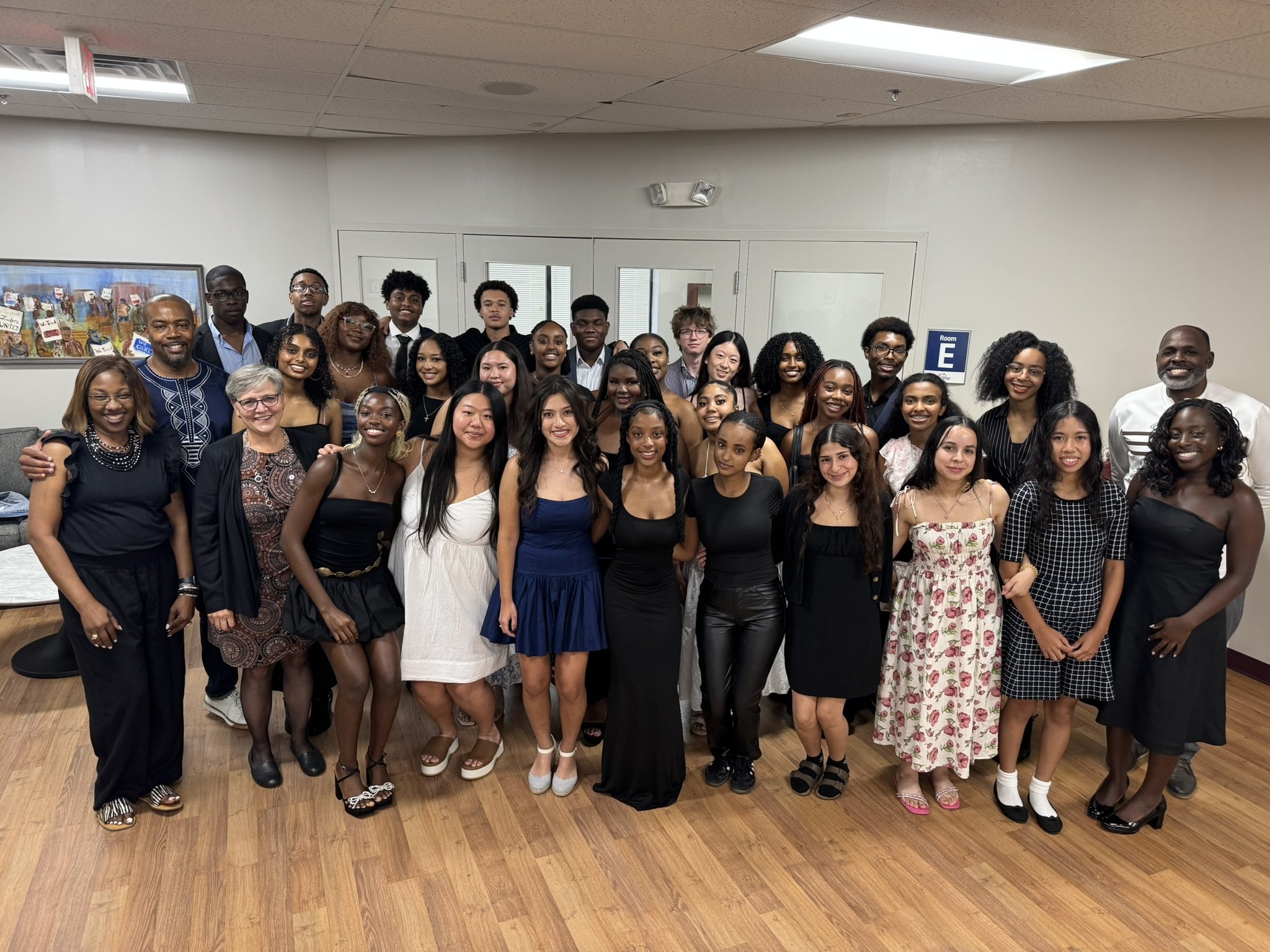
The unique character of the Minority Scholars Program was not actually something deliberately planned from the outset. Instead it emerged, and was shaped by the force and energy of the students themselves who took the notion from their adult supervisors, embraced it as their own mission, and ran with it. That was back in 2005, when the Principal of Walter Johnson High School, Dr. Chris Garran, called myself and a colleague, Esther Adams, into his office for a meeting along with then assistant Principal Dr. Edgar Malker. I was a third year social studies teacher and Esther was one of my colleagues in the social studies department. We were two committed teachers who had very good rapport with our students. And we were two of perhaps only five African American teachers on staff. Dr. Garran was very concerned about a particular situation. The prestigious Morehouse College in Atlanta was offering a full scholarship to one of our African American males who met the minimum requirement of a 3.0 GPA. Yet in 2005, Walter Johnson High School, a prominent school in the esteemed Montgomery County, Maryland had not a single African American male student who met the minimum requirement. This shocking revelation forced us to look at the numbers and data. What we saw was an appalling record concerning the state of our African American and Latino students. The achievement and opportunity gap was staring at us first hand. Despite being a school of much prestige, Walter Johnson High School of 2005 was one in which the majority of black and Latino students were in on-level or remedial courses. In fact, it would be easy for an outsider to take a glance and conclude that the classes were largely segregated. So after a handful of meetings and much deliberation, our principal placed in our hands, (mine and my colleague Esther Adams), the task of building and leading a student focused effort at tackling the achievement gap. We all, however, were pleasantly surprised to see how eagerly the students embraced the concept and ran with it. They decided it would be called the Minority Scholars Program (MSP) and it was they who truly developed it into a student-driven initiative aimed at tackling the opportunity gap. Over the first five years of MSP, the number of African American and Latino students in Honors and AP classes jumped more than 35 percentage points. The WJ school culture became far more inclusive and integrated, as more African American and Latino students could be seen on the yearbook staff, SGA, and the school newspaper. Furthermore, Morehouse College was finally, and continuously, able to offer full scholarships to a number of WJ’s African American male students.
THE EARLY YEARS
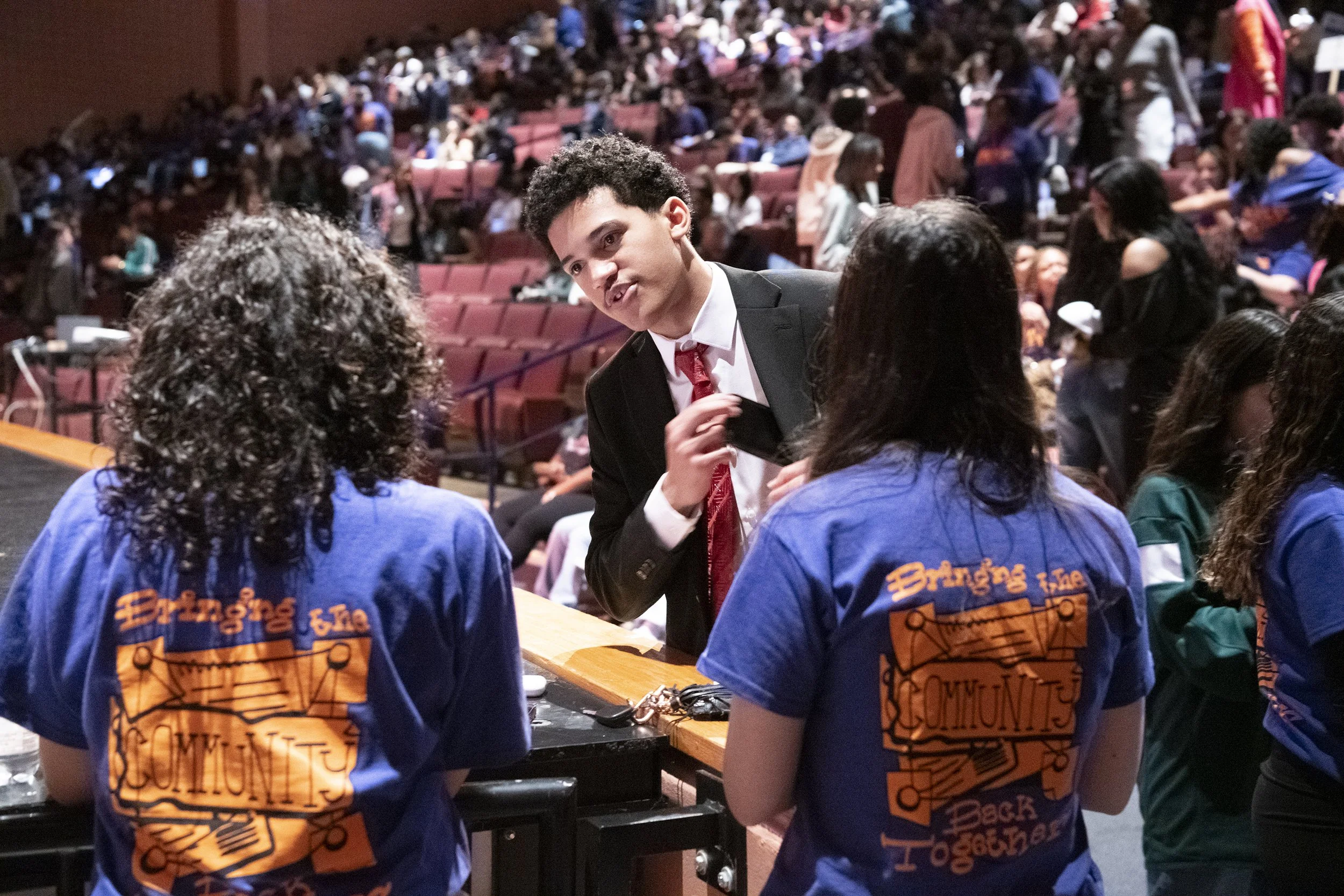
During the early years, however, few in the County gave MSP a second thought. The common perception (that was often even verbalized) was that Walter Johnson High School was a high performing school with few if any problems. And since the popular view was also that it was a school with few if any black or Latino students of significance, it was not really worth the effort. WJ was and is considered one of the “W” schools – a moniker developed by students to indicate the schools that are on average wealthier and “whiter” than the rest of the schools in the County. Ironically, all of these “W” schools are located in the same southwestern corner of the County (Bethesda and Potomac) and all begin with the letter W (or at least have W heavily incorporated in the name!). Walter Johnson High School, Walt Whitman, Winston Churchill and Wootton High School have traditionally led the county in scores as well as lack of diversity. So even despite the fact that two WJ students, in separate years, won the Princeton Prize for Race Relations for their work with the Minority Scholars Program, no one was really interested in an initiative that claimed to benefit African American and Latino students if it emerged from any of these so-called “W” schools. That is until Clarksburg High School, a relatively new school in the County, with a heavy concentration of “minority” students joined the MSP movement three to four years later. The Clarksburg Principal, Mr. James Koutsos, entrusted the development of their MSP program to his vibrant and passionate World Languages Department Chair, Ms. Vilma Najera. Under her guidance, Clarksburg’s MSP grew to such a force that the graduation rate of the High School steadily increased. Finally, a few “big whigs” in the County began to take a little notice. If Clarksburg, a “majority-minority” school was finding similar success to Walter Johnson’s MSP program, then surely there was something to this movement. In fact, it became clear that there was some sort of kinetic energy that sparked when the students met up and shared experiences with their peers at the other schools. With that realization, and the interest to join the movement from BCC and Wootton High Schools, Vilma and I developed the idea of having an annual Intra-County Minority Scholars Program Retreat. The first retreat featured the four schools, and would lay the foundation of the retreats to follow, in which students from various schools across the county would come together to plan, discuss, and share strategies on ways to tackle the opportunity gap. BCC, under the leadership of Sharif Robinson, and Wootton, under the leadership of Randy Alton, would thus become the third and fourth MSP schools respectively. The 4th Annual Intra-County Minority Scholars Program Retreat took place January 2015 and featured over 200 students from 12 different high schools. It was a retreat in which the student leaders from the various schools designed, devised and conducted the workshop sessions for their own peers. It also consisted of five professors from Universidad Santo Tomas of Temuco, Chile who skyped in to observe the highly acclaimed MSP program. Similarly, the 3rd Annual Retreat, just a year earlier served as the planning ground for the highly successful March To Close the Gap. If anything, it is the retreats that are most impressive! They illustrate and demonstrate the power of youth in the most vivid way. And they represent powerful qualitative data that is often overlooked in search of raw numbers. The early retreats took place on the midterm exam make-up day which would fall on a Friday, and the Saturday that followed. Yet despite this being a day in which students could choose to sleep in and take a well needed mental break, the 4th Annual Intra-County Minority Scholars Program Retreat consisted of over 200 African American and Latino students from 12 different high schools who decided to spend that day developing and sharing strategies for tackling the opportunity gap. It was a fact that was not lost on the various former school board members who attended the retreats; Chris Barclay, Shirley Brandman, Judy Docca, and Mike Durso. I am sure if they were asked about the power of MSP, they too would point to the unique nature of students truly being at the helm of creating change. The March to Close the Gap is certainly what gained the most attention both locally and nationally. But MSP has been a positive agent of change for years. It has not only helped to desegregate the higher level courses and increased Honors and AP participation by leaps and bounds along with increasing graduation rates, it has also started a movement within schools in which it is actually cool to be smart! What other program is able to claim that two of its students - Patti Kalil and Gerardo Guizado - both claimed the top Princeton Prize for Race Relations in different years. Or has developed a bi-lingual newsletter, or encouraged students to work together across school boundaries. Or created a video that quickly went viral, entitled I, Too, Am BCC that discusses the isolation, micro-aggressions and other struggles of being a “minority” in Montgomery County. And certainly no other program can claim that they organized over 500 participants to take part in a March to Close the Opportunity Gap.
REFLECTION
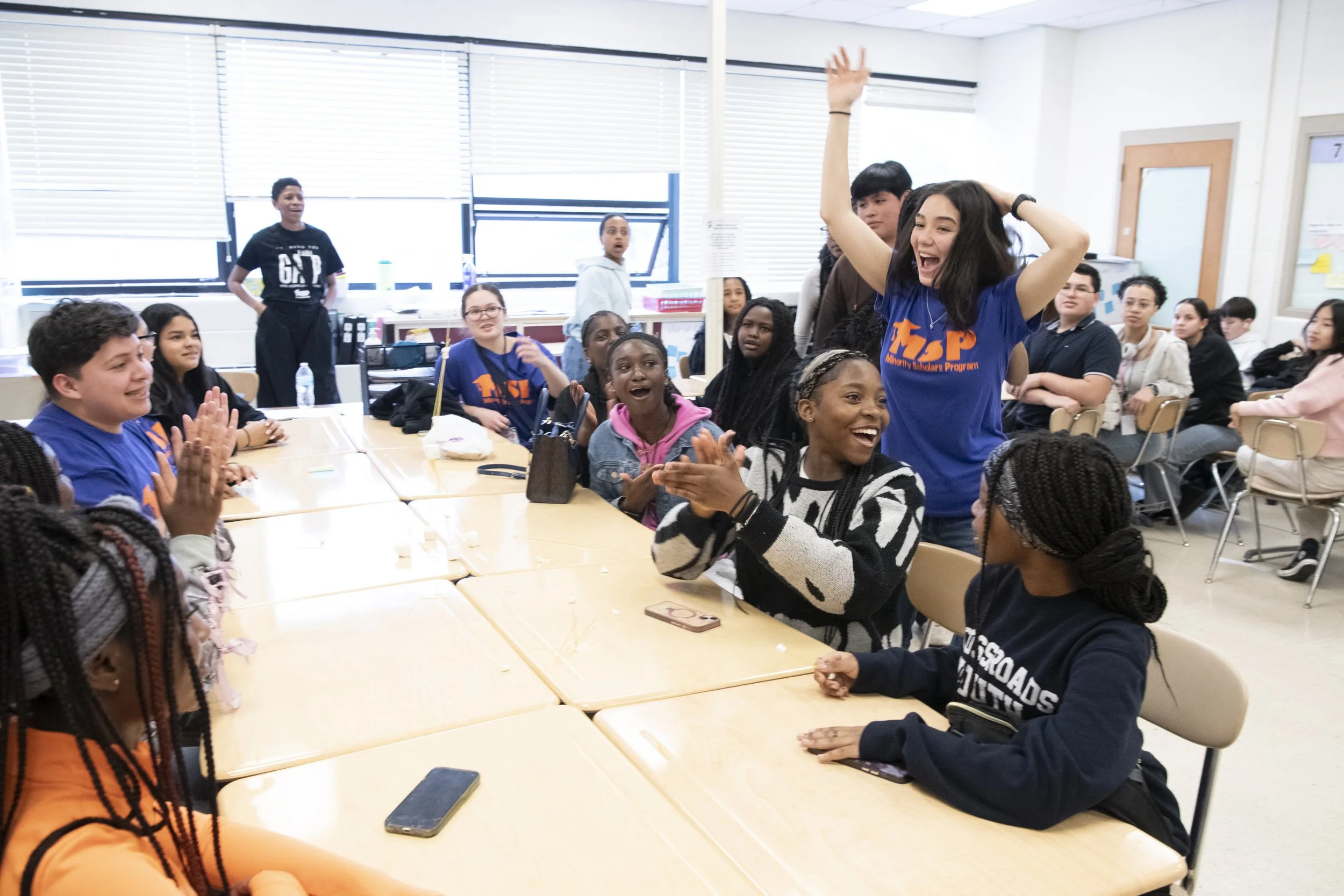
It is perhaps cathartic to reflect upon the growth of a movement that has lasted for 10 years with little to no support. And while it has at times been a frustrating search for validity and support, there is quite a bit of evidence that shows that the work of the Minority Scholars Program has helped push Montgomery County Public Schools to focus more deliberate efforts to address the opportunity gap. One year before the March, three MSP students went before the school board to petition for support of the program and called for its implementation across the County. Luis Lavadenz from Walter Johnson, Noah Wossen from BCC and Zamari Love of Clarksburg High School all stood before the school board and gave impassioned pleas for support for MSP. The Board was quite impressed with the students’ eloquence and commitment. After that effort and demand, a mini-achievement grant was made available to assist programs within MCPS that were working to address the opportunity gap. It was a great accomplishment, but not nearly enough. In theory, the money resulted on average to be about $4000 per school, but was subject to so many restrictions that oftentimes it could not be used. Furthermore, it was at the whim and discretion of school leaders, some of whom were not supportive of MSP or any other programs aimed at closing the gap. Needless to say, money has consistently been a challenge. Instead, MSP has expanded by the energy, commitment and good will of a handful of passionate school personnel willing to lead and organize the students. And yet still, without being institutionalized and without the true financial support, we will continue to have difficulty withstanding the transitions of adult personnel. MSP currently has a handful of staff volunteers (mostly teachers) who regularly pay out of pocket for MSP expenses while spending long hours coordinating the program at their particular high school. How long can that last, when carrying a full teacher or administrator load? And yet we push on because we know the Minority Scholars Program is something special!
SUMMARY
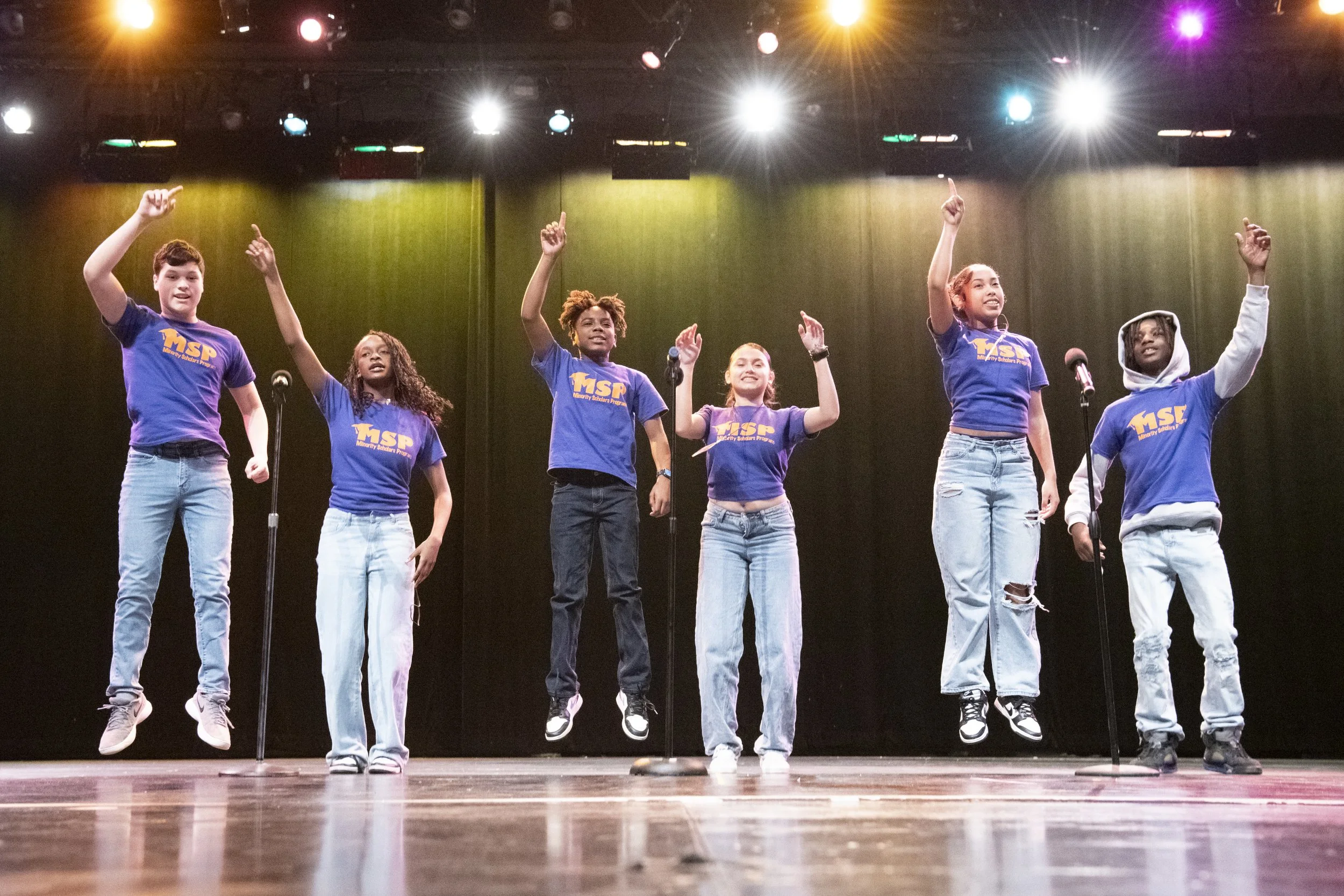
Over the ten year history of the Minority Scholars Program, we have had to regularly explain the merits and functions of MSP. What is it? What makes our program work? Why has it struck such a chord with so many high school students? And more recently, what was it that sparked so much intrigue amongst the faculty of Universidad Santo Tomas and Universidad Catolica in Temuco? Quite simply, MSP is a student-driven initiative that allows the youth to be at the center of creating positive change. Our success is largely because we empower students to be positive influences within their schools. Their positivity has rapidly attracted other students. It has in many ways become a movement that has expanded quickly and has the potential to expand even faster if given the proper support. In four years, MSP went from 2 schools to 15 high schools in Montgomery County. And this has occurred with very little support. Truth be told, it was the students that led the way. It was their embracing of the concept that truly gave it the legs to run on. What is clear is that we must involve students in the solution. We must also stimulate and motivate the students who are in the gap to become leaders in reducing that very same gap. At Walter Johnson High School, Clarksburg High School and BCC High School (the first three MSP programs), the school culture has dramatically changed since the inception of the program. Walter Johnson’s MSP was established first, at a time when most Black and Latine students were in the lowest level classes. Both groups are now well represented in both Honors and Advanced Placement (AP) classes. The percentage of involvement has jumped over 35%. At Clarksburg, the school’s graduation rate has increased as a whole ever since the implementation of the Minority Scholars Program. And the number of scholarships awarded to Black and Latine students at BCC has also increased since the inception of MSP. Especially when dealing with issues of race and ethnicity, MSP is an important solution to the gap as it cuts through notions of isolation, sense of inferiority, low expectations and shame. The Minority Scholars Program, or MSP, is far more than a club, honor society, or training ground for leadership development. MSP is a united non-profit led by students (aided by staff) charged with positively changing the culture of our schools and tackling one of our country’s biggest challenges – closing the opportunity gap and ensuring that success is not predictable by race, ethnicity, and/or socio-economic background.